
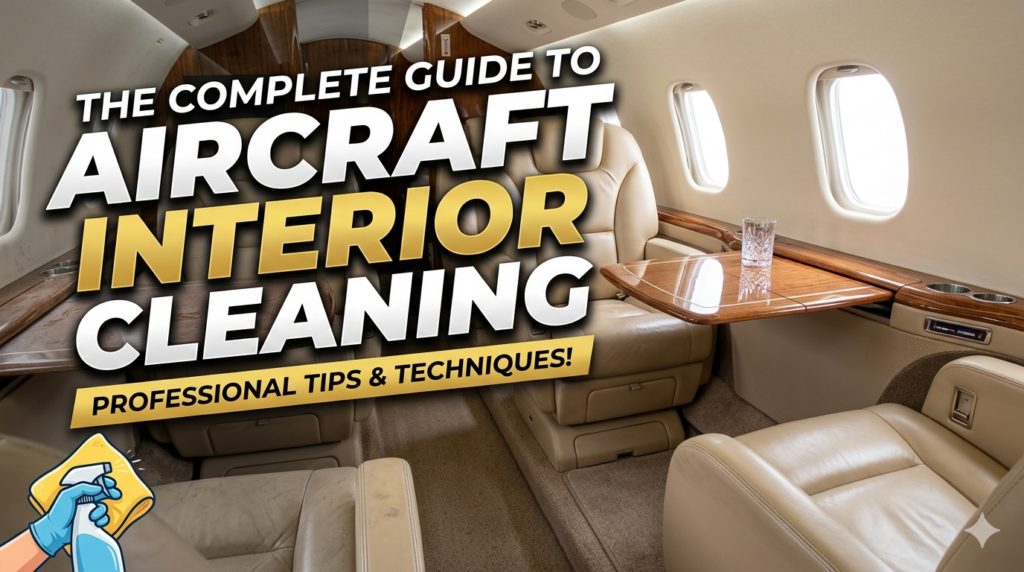
The interior of a private aircraft is where passengers form their entire impression of the aircraft and its owner. A gleaming exterior with a tired, stained, or odorous cabin sends exactly the wrong message. More importantly, a dirty aircraft interior is a hygiene risk — particularly in an enclosed, pressurized environment where passengers breathe recirculated air for hours at a time. This guide covers everything you need to know about professional aircraft interior cleaning.
Why Aircraft Interior Cleaning Is Harder Than It Looks
Aircraft interiors contain an unusually varied mix of materials in a very confined space: leather, wool or nylon carpet, fabric headliners, Corian or composite countertops, anodized aluminum, polycarbonate windows, Alcantara suede panels, and an array of electronic components. Each material requires different products and techniques. Using the wrong cleaner — for example, an alcohol-based product near a leather panel — can cause immediate, irreversible damage.
The confined nature of aircraft cabins also means that cleaning products with strong fumes need to be selected carefully. In a car, you can open windows. In an aircraft, fumes linger longer and passengers and crew are more exposed.
The 7 Areas of a Complete Aircraft Interior Detail
1. Cabin Hard Surfaces
All hard surface panels — door liners, bulkheads, overhead panels, galley surfaces, entertainment bezels — are wiped down with aviation-safe all-purpose cleaners. Special attention goes to areas around food service (galley counters, trash compartments) and high-touch areas like armrests, window shades, and reading light switches.
2. Leather Seats and Panels
Aircraft leather cleaning is a two-step process: cleaning with a pH-neutral leather cleaner, then conditioning with a dedicated aviation leather conditioner. In Florida’s climate, leather that isn’t conditioned regularly dries out and cracks due to the combination of air conditioning (which desiccates the air) and intense heat when the aircraft is parked. Conditioning every 3–4 months is recommended for aircraft in regular use.
3. Carpet Cleaning
Aircraft carpet cleaning goes well beyond vacuuming. Professional cleaning involves hot-water extraction — a process that injects heated water and cleaning solution into the carpet pile and immediately extracts it along with loosened dirt, odors, and bacteria. This is particularly important in Florida where humidity can promote mold growth in wet carpet that isn’t properly extracted.
4. Windows and Transparencies
Aircraft windows require plastics-specific cleaning compounds. Standard glass cleaners can cause micro-scratching and promote crazing in acrylic and polycarbonate surfaces. A professional will use appropriate compounds and microfiber applicators to clean and polish transparencies without causing damage.
5. Cockpit and Flight Deck
The cockpit requires the most careful treatment of any area of the aircraft. Avionics panels, display screens, and control surfaces must be cleaned with products that are explicitly approved for electronics use — no ammonia, no solvent-based cleaners. Dust removal from switches, knobs, and throttle quadrant components uses compressed air and fine brushes. The glareshield and instrument panel are polished to reduce reflectivity and glare during day operations.
6. Lavatory
Aircraft lavatories are disinfected to commercial standards. High-touch surfaces — toilet seat, flush handles, door lock, sink faucet — are disinfected with an aviation-approved biocide. The waste tank area is cleaned and deodorized. For charter aircraft, lavatory cleanliness is a direct customer experience metric.
7. Galley
Galley surfaces, cabinetry, and any appliances (coffee makers, convection ovens, refrigerator drawers) are cleaned and sanitized. Drain traps are cleared and deodorized. This is an area where odors originate easily and are difficult to eliminate once established.
How Often Should Aircraft Interiors Be Professionally Cleaned?
- Charter aircraft (frequent use, multiple passengers): Monthly full interior detail, with weekly light touch-up cleans
- Corporate flight departments (regular scheduled flights): Monthly detail
- Private owners (occasional use): Quarterly detail minimum; before any major trip
- Aircraft in storage or infrequent use: Detail before return to service and every 6 months in storage
Can You Do It Yourself Between Professional Details?
Yes — and you should. Between professional details, maintaining your aircraft’s interior is straightforward:
- Vacuum carpet and seats after each flight (or have your FBO’s ground crew do it)
- Wipe hard surfaces with a microfiber cloth dampened with diluted aviation-safe cleaner
- Address spills immediately — dried spills are significantly harder to remove
- Use a UV-protectant leather wipe monthly on seats if you don’t have a regular professional detail
What you shouldn’t do between details: use household cleaning products, apply automotive carpet fresheners (the residues are not cabin-safe), or use paper towels on screens or windows.
| Book an Aircraft Interior Detail Across Central Florida |
| ClearWing Aviation Detailing provides complete aircraft interior cleaning services at 13 airports across Orlando and Central Florida. From cockpit to lavatory, we restore cabin environments to a standard that impresses passengers and preserves your investment. Call (321) 375-2200 or email clearwingaviationdetailing@gmail.com to book. |