
If you’re planning an international flight from Florida, you may have encountered the term ‘disinsection’ in your pre-trip planning. It sounds technical, and for good reason — it’s a specific regulatory requirement that catches many private aviation operators off guard the first time they encounter it. This article explains what aircraft disinsection is, which countries require it, how it’s performed, and how ClearWing Aviation Detailing can handle it for your aircraft before your next international departure.
What Is Aircraft Disinsection?
Aircraft disinsection is the process of treating an aircraft’s interior with insecticide to kill or control insects — primarily mosquitoes — before crossing certain international borders. The term is deliberately distinct from ‘disinfection’ (which addresses microbes and pathogens). Disinsection is specifically about insects.
The practice exists because disease-carrying insects like the Aedes aegypti mosquito — a vector for dengue fever, Zika virus, chikungunya, and yellow fever — can survive in aircraft cabins and be transported across the globe in a matter of hours. Countries with established disease control programs use disinsection as one layer of protection against importing insect vectors they’ve successfully controlled or eliminated domestically.
What Are the Two Main Methods?
The World Health Organization (WHO) and the International Civil Aviation Organization (ICAO) recognize two primary disinsection methods:
1. Aerosolized spray (with or without passengers aboard): A WHO-approved insecticide aerosol is applied throughout the cabin. Some countries require this while passengers are on board; others require application before passengers board. The active ingredient is typically a pyrethroid-based compound such as permethrin or d-phenothrin.
2. Residual method (pre-departure treatment): The aircraft’s interior surfaces — walls, overhead bins, under seats — are treated with a residual insecticide that remains effective for up to 8 weeks. This is the preferred method for private aircraft operators because it avoids in-flight spraying and can be applied well in advance of departure.
Which Countries Require Disinsection?
Disinsection requirements vary by country and can change based on active disease outbreaks. Some of the most commonly encountered destinations that have required disinsection from Florida-based operators include:
- Australia and New Zealand — strict year-round requirements for all inbound aircraft
- Caribbean islands — requirements vary by island and outbreak status
- India — residual treatment required for flights from certain regions
- Parts of Africa and Southeast Asia — requirements tied to active malaria and dengue zones
- Italy and other EU countries — have imposed requirements during Zika outbreak periods
- Several Central and South American countries — varies by current disease vector status
Before any international flight, operators should verify current disinsection requirements for their destination through the U.S. Department of Transportation’s Aircraft Disinsection Requirements database and consult with their handling agent or trip support provider.
Is It Required for Domestic Flights?
No. Disinsection is exclusively an international flight requirement. Domestic flights within the United States do not require disinsection under any current regulations.
What Happens If You Don’t Comply?
Non-compliance consequences can be significant. Destination countries may refuse entry to the aircraft, require on-arrival disinsection (which can delay departure and expose passengers to in-cabin spraying), impose fines on the operator, or flag the aircraft with customs authorities. For business aviation operators on tight schedules, a disinsection delay at the destination is a costly problem that’s entirely avoidable with proper pre-departure preparation.
How Is Disinsection Performed on Private Aircraft?
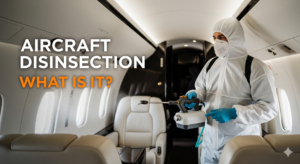
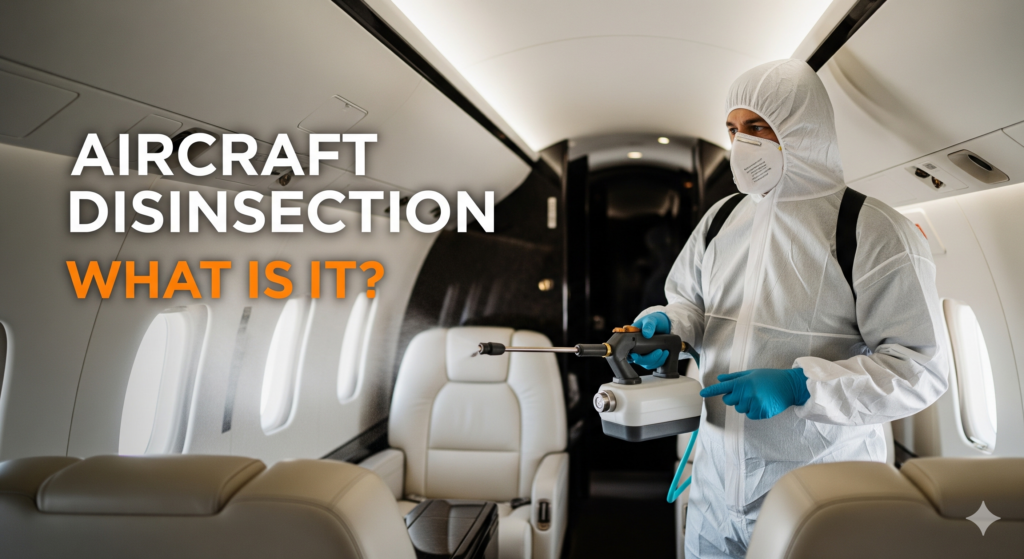
For private jets and turboprops departing from Florida, the most common approach is the residual method — applying an approved insecticide to interior surfaces while the aircraft is on the ground, before departure. This:
- Avoids any in-flight spraying discomfort for passengers
- Can be documented and certified for presentation at the destination
- Is valid for up to 8 weeks depending on the product and destination country’s acceptance
- Does not require passengers to be off the aircraft for extended periods
Documentation is critical. A disinsection certificate should be prepared stating the date, aircraft registration, method used, insecticide product and concentration, and the operator’s contact information. Many destination countries require this certificate upon arrival.
ClearWing Aviation Detailing’s Disinsection Service
ClearWing provides residual aircraft disinsection for private jets and turboprops at airports across Orlando and Central Florida. Our service includes treatment of cabin interior surfaces using approved insecticide products, along with documentation to support your destination country’s compliance requirements.
We coordinate the timing of your disinsection treatment around your departure schedule to ensure maximum certificate validity and zero disruption to your pre-flight timeline.
| Schedule Your Disinsection Before Your Next International Departure |
| Don’t arrive at your destination without proper disinsection documentation. ClearWing Aviation Detailing handles residual aircraft disinsection at 13 airports across Central Florida. Contact us at (321) 375-2200 or clearwingaviationdetailing@gmail.com to coordinate timing with your departure schedule. |